

Should You Monetise Your Art?
"You can't use up creativity. The more you use, the more you have" - Maya Angelou

Creativity is meant to be used and consumed. It yearns for an audience and is not fussed on if that’s a single person or a crowd. It’s a recyclable, self-fulfilling resource. It feeds and loops and sustains and changes, and oftentimes it’s not consistent, but it is reliable.
After every art block, it will come back.
And this self-regenerative ability is very attractive to capitalism. Capitalism thrives on the next new thing but there comes a time when an iphone cannot be improved annually, a company cannot squeeze out more money from their usership without cutting corners, or putting in add-ons to simply jack up the price (looking at you Netflix).
But creativity? Creativity is liminal and self-planting. Unfortunately for the finance bros, it takes a long time to curate - hence, their clear besotment with A.I.
Before this becomes a diatribe on artificial intelligence, I’ve brought this up to articulate that we live in a hustle culture and it’s not uncommon that the question posed has not entered our minds, even for a brief period of time - and this is the Round Up after all, a series where I scour the internet for the answers to common questions that tend to plague creatives and present my findings here.
Am I getting better at segways? That’s not today’s question - today’s question is:
Should you monetise your art or let it be a best-kept secret?
Answer: Sure.
Do it the right way
To aid in the defence of monetisation, let me introduce Kelsey Rodriguez, a visual artist and content creator. As well as selling her own oil paintings- picturesque scenery that blends earthy tones with soft sunlight, Kelsey is an avid Youtuber, whose channel @KelseyRodriguez has over 298k subscribers. She offers free advice for up and coming creatives looking to start a brand on their own terms. Her videos range from business breakthroughs to specific art advice. Her approach is to “(guide) creatives toward financial stability without sacrificing their integrity”.
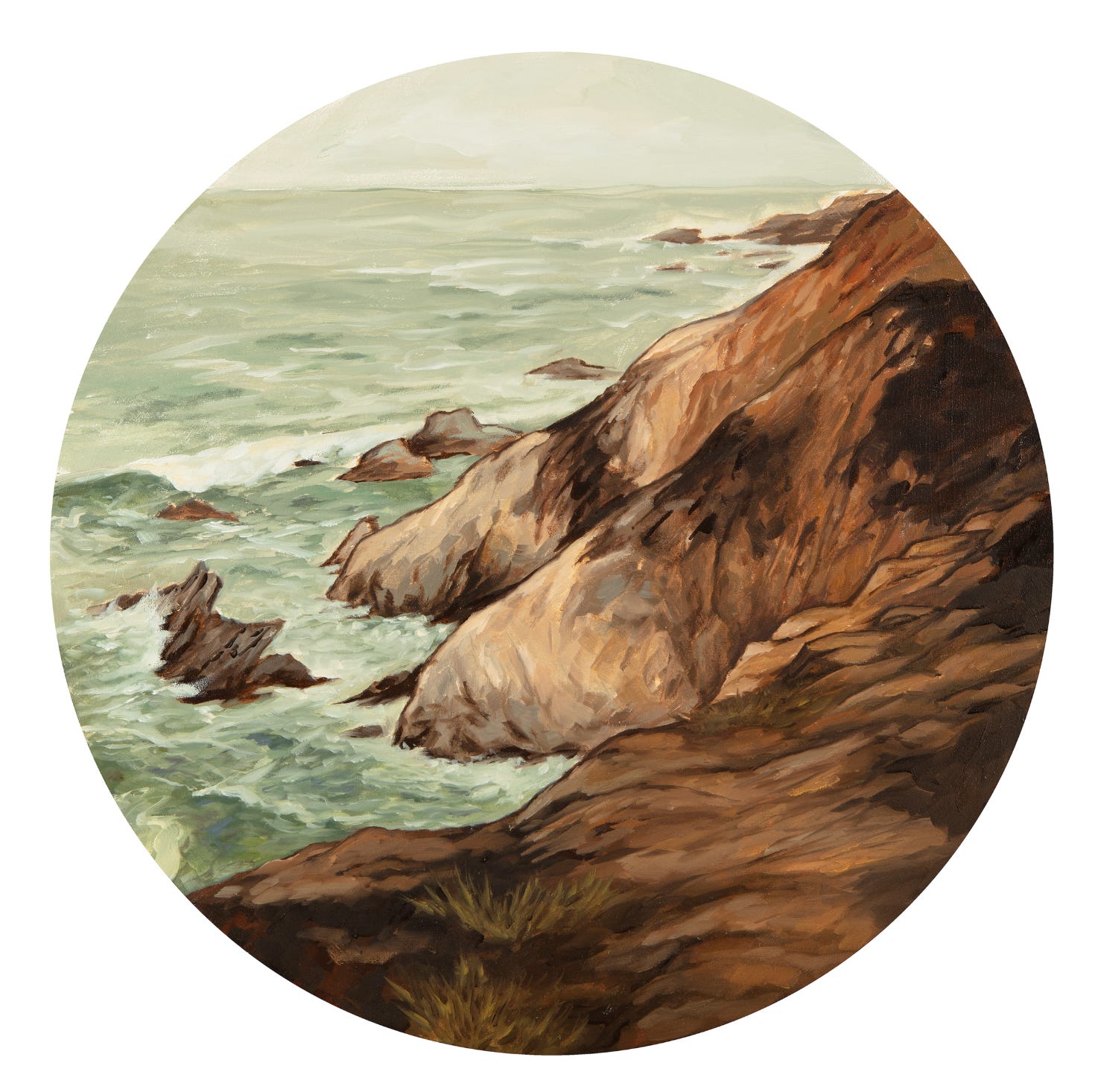
“California Coast” 18x18 by Kelsey Rodriguez (all links at bottom of article)
Rodriguez’ approach to monetising your business comes from a genuine place of love for art and I highly recommend following her, or other creatives that understand how to become a successful creative without compromising why you started.
Another artist that offers free advice and teachings is Mark Carder, also known as @DrawMixPaint on youtube. Creating his channel in 2012, Carder has a range of videos on the specifics of oil painting for realism, from paint mixing, brushstrokes, painting supplies and studio setups. In his own words “My goal is to eventually cover all essential instruction for painting realism in oil so that anyone can learn to paint for free”
His videos are easy to follow, I highly recommend his ‘how to mix paint videos’ which have cut down my prep time for paintings by about half. In his video ‘paint what you personally love - something new - do not listen to anyone else” he states. “You have to trust your own taste, it’s the only thing you have”.
As an artist who started professionally painting in 1986, he’s most well known for his commissioned painting of George W. Bush and has sold paintings for up to $75,000. It’s invigorating to know that a person of his mastery and experience still stands by the fact that as an artist, we know what’s best for ourselves and we know when our art needs changing or when we’ve gotten it right.
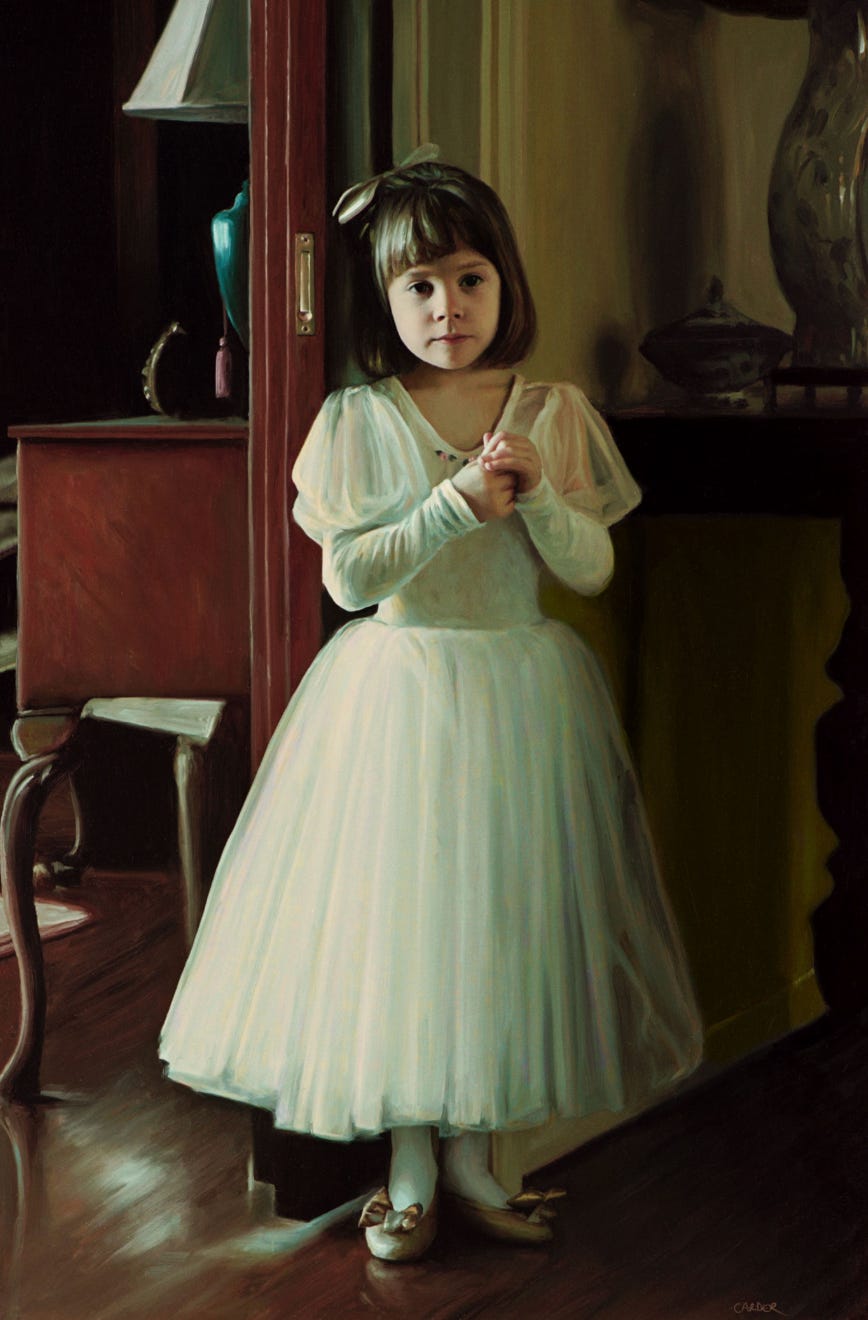
“Portrait of a Little Girl” - Mark Carder
I think it’s important to follow through with this advice when we’re asking if we should monetise our art. There is no universal answer, but take comfort in the fact that thousands of creatives before you have tossed up the same decision.
My own answer:
Annoyingly, I think that only you will know that answer, I also think that answer can and should change depending on where you are in your creative journey.
In all honesty, it’s not as big of a question as it seems to be. Both answers are perfectly okay, but come with some headaches that we may toss and turn over that in the end, for example:
I want to monetise my art but what if people don’t buy it?
Say you put out a song and no one listens to it. You’re in the exact same position you were in five minutes ago. If no one listened to your music when it was in your private folder and no one listened to your music when you promoted it on socials, then you have experienced no loss. It’s still 0-0.
You have, however, gained the invaluable and irritating experience of being rejected. And that’s going to happen in your life in a multitude of ways anyway.
I want to monetise my art but what if it’s really bad?
Say you wrote a script and my god, it’s terrible. It’s so ludicrously inane and that it makes Riverdale look like a Shakespearean drama. That’s fine. Perhaps pivot to comedy?
Just kidding, what I mean to say is that consumable art to a third party is either forgettable or good.
Both are fine. Both do exactly what they’re supposed to do. Perhaps you need to write several chewing-gum novels before you discover your magnum opus.
It takes a lot of directed, focused effort to make harmful art. Anything other than that is good, and where all genuine creatives operate. There’s no such thing as bad art, only forgettable art, and that’s brilliant because when you do make that good piece of creative work - which you will, all that hard work and training compounds - that will be what you’re remembered for.
I want to monetise my art but I don’t want to be an influencer
So don’t. You can’t keep up forever anyway. Post what you like, follow who inspires you and document what you would love to look back on.
And now let’s look at the adverse:
I want to keep my art as a hobby but people keep telling me to monetise.
Non-creatives often have this bright idea and it’s usually coming from a very eager, genuine place, but only you know if monetising will lead to burning out. If painting is something you only do a couple times a month to unwind, then turning it into a profitable business where you churn out a print each week is not going to be sustainable and will lead to you not picking up a paintbrush in years.
If creativity is where you find solace, it’s a very big decision to turn it into a job.
If you want to monetise now, go for it, if you want to do it in a year, do it, but don’t take advice from someone who isn’t on the same wavelength as you.
Perhaps you monetise your writing. Perhaps your painting is just for your loved ones. It’s all good.
And anyways, it’s never too late to change your mind : )
***
Thanks for reading! It’s nice to meet you! Let us know if you like this type of content or if there’s anything else you’d like to hear from us.
You can find the creatives that were mentioned in this article down below, if there’s any topics or people you’d like to see me cover, let me know in the comments. (And if you’d like to be featured, let us know too!).
Thanks again for reading and remember - be kind to yourself!
Catch you later,
Kaye
Make sure to check out the artists mentioned!
Kelsey Rodrigeuz
Website: https://www.kelseyrodriguez.com/
Youtube: @KelseyRodriguez
Instagram: @kelseyrodriquezart.
Mark Carder / Draw Mix Paint
Instagram: @drawmixpaint.
Website: https://www.drawmixpaint.com/
Youtube:
Ready for more?
Read Next: How do you know if your idea is good enough?
Front Row is your backstage pass to our essays, workshops, and online summits on navigating the future of creativity. Built by, for & with independent creatives.
We’re also publishing on: Instagram | YouTube | TikTok | LinkedIn | Threads
Enjoyed this! What's the why and what are you trying to build? I have a friend who is a BRILLIANT iconographer and graphic designer. She does exhibitions for no money and out of a love for the collaboration. She definitely earns money for her practice that pays the bills.